01
BUYING GUIDE
Discover how electric security gates help to improve privacy, control access, and protect homes and businesses with smarter, safer entrances.
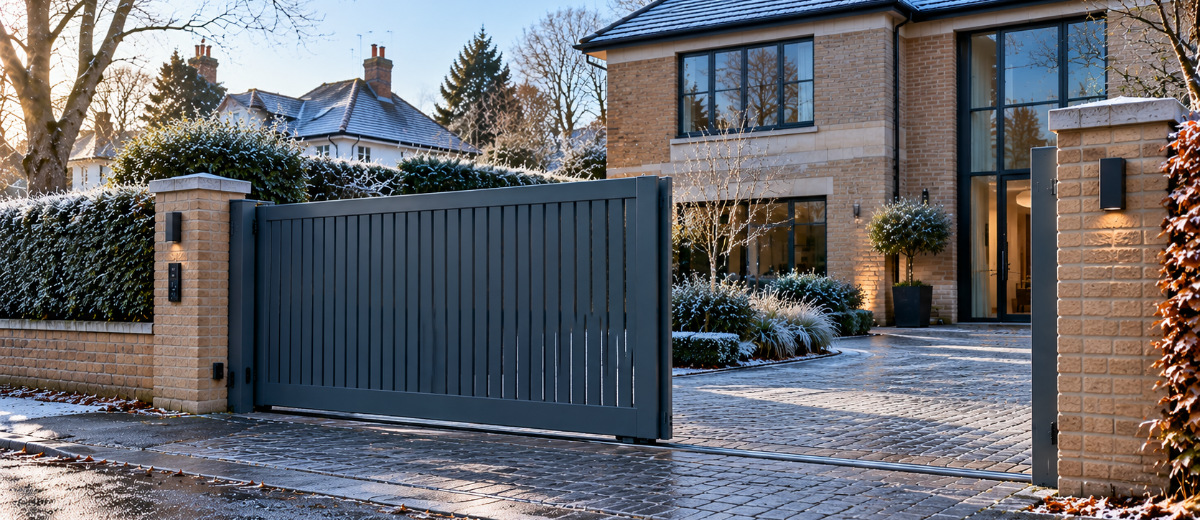
Electric security gates do more than define the edge of a property. They can help you manage who comes and goes, improve privacy and create a more secure, clearly controlled entrance.
For homeowners, this could mean checking who is at the gate before they enter the driveway. For businesses, it can make it easier to manage staff, visitor and delivery access while helping to keep unauthorised vehicles and pedestrians off site.
The right choice will depend on your entrance, how it is used and the system you select. Read on as we look at the practical benefits of electric gates and the key points to consider before installation
An electric gate can significantly support the security of a home or business by creating a controlled entrance. Its effectiveness will depend on the gate’s design, construction and automation, as well as how it is used day to day.
As with any security measure, a gate is most effective as part of a wider approach. At home, this may include secure doors, suitable lighting and well-maintained boundaries. At commercial or industrial sites, it may also sit alongside CCTV, site procedures or security staff.
A gate that is left open, poorly maintained or unsuitable for the site will not offer the same level of control.
The way access is managed can be tailored to the people using the property. At home, this can make it easier to manage visitors and tradespeople without leaving the house or manually opening the gate. Remotes, keypads and intercoms can be selected around the household’s usual routine.
At a business, access control systems can be arranged for staff and authorised vehicles, or scheduled deliveries. This can be particularly useful at sites with car parks or areas that should not be freely accessible.
The aim is simple: make everyday access straightforward for the people who should be there, while giving you a clear process for everyone else.
Privacy is one of the main reasons many customers consider an electric gate, particularly for homes on busy roads or properties with open driveways.
A gate can reduce direct views of the driveway and make it harder for passers-by to see which vehicles are present or how the property is used. The level of privacy will depend on the gate design. A solid or closely boarded gate will provide more screening than open railings or widely spaced bars.
At a commercial property, privacy may involve limiting views into a service yard, storage area or staff parking. The design, height and infill of the gate can be selected to match the required level of screening. Privacy also needs to be balanced with visibility and safe movement at the entrance. The final arrangement should work well for the people and vehicles using the site.
If you keep vehicles or equipment in an open driveway or yard, a controlled entrance can provide added reassurance, especially when the property is unoccupied or quiet. At a home, this may include cars, bicycles, garden equipment or other items stored within the driveway or garage area. The gate provides an additional barrier between these items and the public road.
For a business, the benefit can be especially useful. Yards, warehouses, industrial premises and storage facilities may contain vehicles or expensive tools and stock that need to be protected. A gate can help control vehicle access to these areas and support the wider perimeter-security plan.
The gate should be selected based on the likely use and level of risk. A lightly used residential entrance and a busy industrial yard will have very different requirements for gate construction, automation and access control. Choosing a system that matches the expected level of use can also help reduce avoidable wear and unplanned repairs over time.
Security is the main consideration for many projects, but the appearance and organisation of the entrance also matter.
A well-designed gate can enhance the frontage of a home or business. Choosing materials and proportions that work with the surrounding buildings and landscaping can help create a more considered overall appearance. At a home, the gate can become part of the property’s wider frontage. Its height and finish can be selected to work with the house, driveway, walls, piers and landscaping. Practical requirements should still guide the final design.
At a business, a well-maintained entrance can create a more professional first impression for visitors and staff. It can also help direct people towards the correct point of entry.
It may also make the site more appealing to future buyers, tenants or occupiers, although any effect on property value will depend on the location, type of property and quality of the installation.
Homes and businesses both receive visitors and service providers, but the way they manage them is often different. An electric gate can provide a clearer process for both cases.
For homeowners, an intercom or video entry system can allow residents to speak to a visitor before giving access, which can be particularly useful for people who are unfamiliar with the property. For businesses, access control can be planned around different user groups. Staff may have routine access, while visitors and contractors use an intercom or check-in process.
This can help reduce confusion at the entrance and support safer movement around the site, especially where vehicles and pedestrians need to be kept separate.
An electric gate creates a visible entrance and a more defined boundary, making it clear where private or restricted space begins.
For homes, this may provide a greater sense of separation between the property and the road, pavement or neighbouring land. It can also be particularly useful on open-fronted plots or properties where the driveway leads directly towards the home.
For businesses, a clear perimeter can help distinguish customer areas, staff parking, loading bays, yards and restricted operational spaces. It also provides a more formal arrival point for visitors and contractors.
The gate should be designed to work with the rest of the boundary. Its materials, height, infill and finish can be selected around the level of privacy required, as well as the style of the building and surrounding area.
Electric gates allow authorised users to open and close the entrance without leaving their vehicle, which can be particularly useful in poor weather, at night or where the property is accessed regularly throughout the day.
A remote control or intercom system can make entering and leaving a home more straightforward for family members and visitors. A separate pedestrian gate may also be useful where people regularly enter on foot.
At a warehouse or industrial site, automation can help reduce unnecessary delays at the entrance. Staff might use fobs, cards or keypads, while visitors can request entry through an intercom or reception-controlled system. This can help keep access organised without requiring someone to be physically present at the gate for every arrival.
The right gate system starts with the entrance itself. Before selecting a gate, it would be useful for you to consider a few practical questions, such as:
How wide is the entrance, and how much space is available behind or beside it?
Does the driveway or access road slope?
Which vehicles need to use the entrance?
How frequently will the gate operate?
Who needs access, such as residents, staff, visitors, contractors or delivery drivers?
What existing walls, posts, piers, fencing or services need to be considered?
How will pedestrians move safely through or around the entrance?
It is also worth deciding what matters most at the property: privacy, controlled access, the appearance of the entrance or the way traffic moves through it.
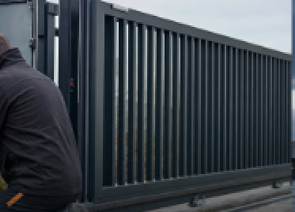
A sliding gate may be suitable for wider entrances, sloping driveways or sites where there is sufficient run-back space alongside the entrance. A swing gate may be worth considering where there is enough room for the leaves to open safely without affecting vehicles or pedestrians.
Safety should be considered from the outset. The gate and automation should be chosen based on your entrance, the people using it and how vehicles and pedestrians move through the area. Regular checks and maintenance also help keep a powered gate safe and reliable to use.
There is no single electric gate type that’s right for every home or business. A site survey would give you the clearest basis for making the most appropriate choice.
Read more about sliding gates vs. swing gates.
Electric security gates can provide practical benefits for homes, offices, estates, yards, warehouses and other working sites. However, making the right choice depends on understanding the entrance, how it’s used and the level of access control required.
If you are considering an electric gate for your home or business, Electrogate can help you explore the options. We can assess your entrance, talk through how you use the space and recommend a system that suits your practical and security requirements.
Contact us to discuss the best electric security gate for your property.
MORE FROM ELECTROGATE
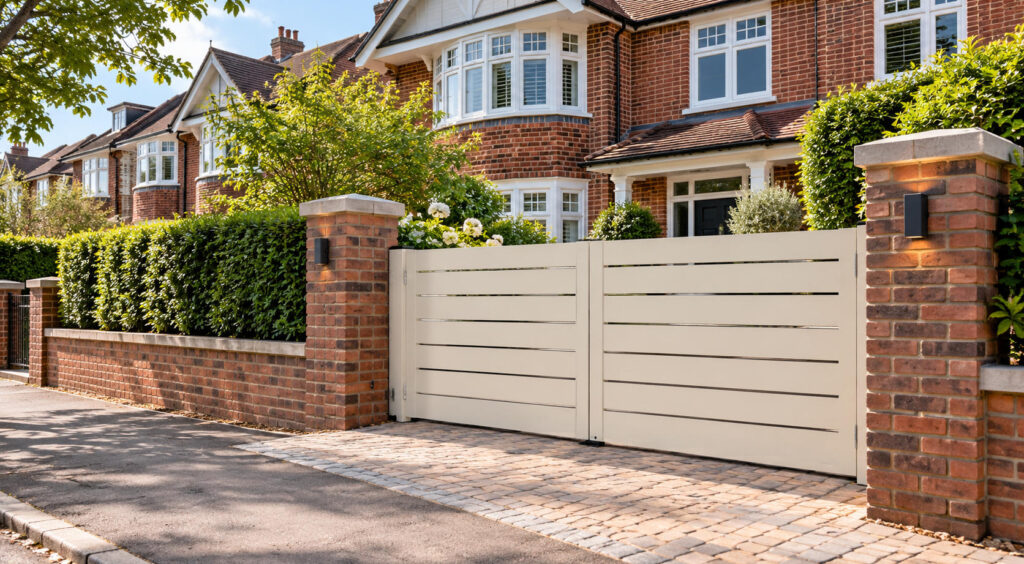
AUTOMATED GATES & BARRIERS
We’ll help assess traffic, security, site and access requirements before recommending the right system.