01
BUYING GUIDE
Discover the key differences between a sliding gate vs a swing gate and make the most informed choice for your property.
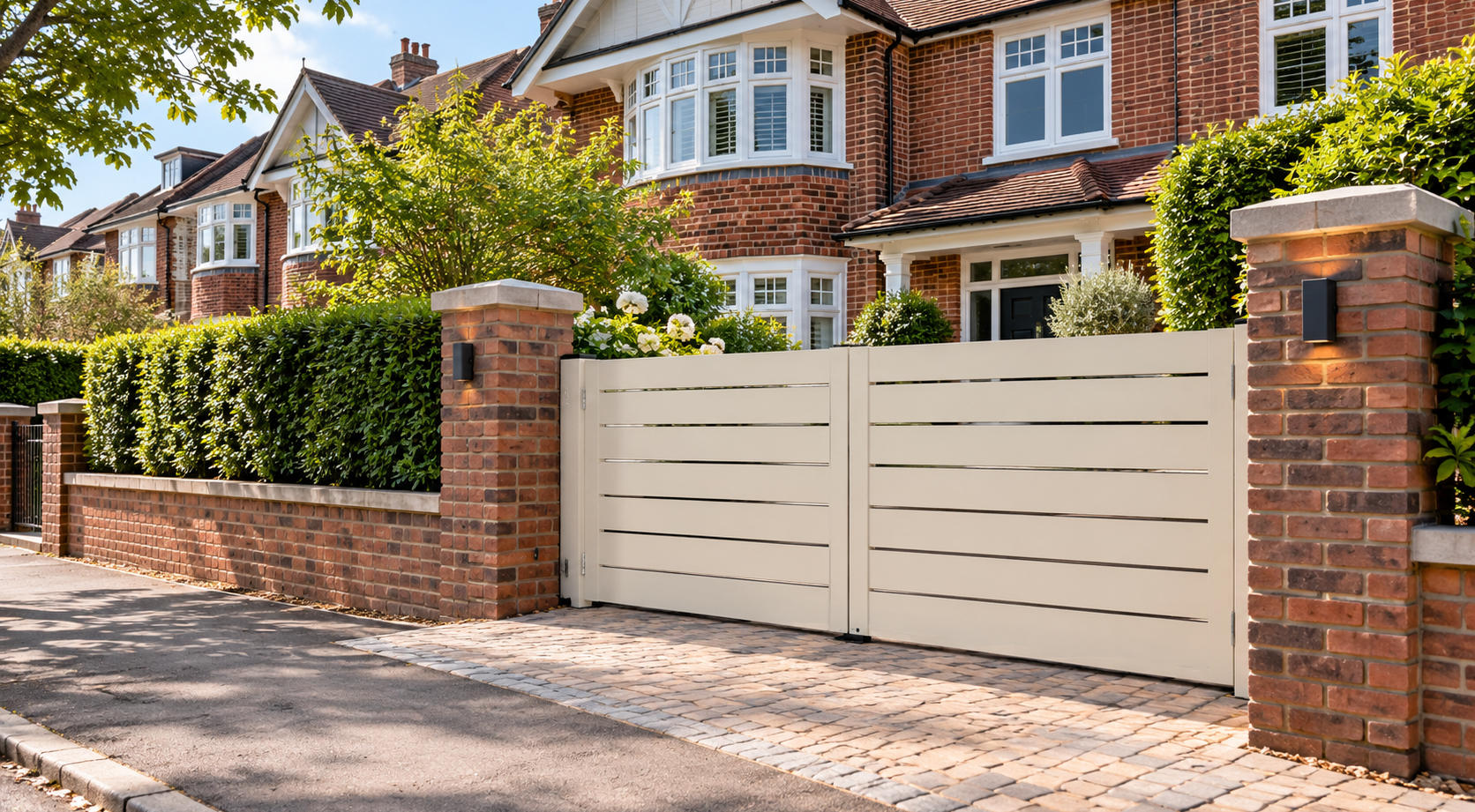
The right electric gate needs to suit the way your entrance is used. The way it opens affects the space available at the entrance, how vehicles use the driveway and how the system works from day to day.
Two of the most common options are sliding gates and swing gates. Both can provide controlled access and create a clear boundary around a home or site.
Deciding between a sliding gate vs a swing gate involves both appearance and the practical requirements of the entrance. A sliding gate moves alongside the entrance, while a swing gate opens into the property. The layout of the entrance and the available operating space will help determine which option is more suitable.
This guide explains the practical differences between the two and the factors to consider before making a decision.
An electric gate can help you create a clearer, more controlled entrance to your property. It can provide privacy at home or manage access to a busier site.
Depending on how the entrance is used, it may also provide:
Privacy is provided by a defined boundary at the entrance
Controlled access for residents, staff, visitors, contractors and deliveries
Security around homes, gardens, business premises and restricted areas
Everyday convenience through hands-free devices such as remote controls, keypads or intercoms
A thoughtfully designed entrance that works with the building and its surroundings
However, the gate itself is only part of the system. The layout of the entrance, the automation and the safety equipment need to work together. This is what helps the system operate safely and as intended.
Consideration | ||
|---|---|---|
How the gate moves | A sliding gate moves horizontally alongside the entrance, rather than opening into or out of it. | A swing gate opens from posts or piers. It may have one leaf for a narrower entrance, or two leaves that meet at the centre of a wider opening. The leaves can open inwards or outwards, depending on the entrance layout and the space available. |
Space needed | Requires clear run-back space along the boundary so the gate can move clear of the driveway when open. | Requires sufficient clearance behind the gate line for the leaves to open and close safely. |
Suitable entrances | Can be a practical option where space behind the gate line is limited. It may also suit wider entrances or sloping driveways. | Can be well suited to properties with a level or suitably prepared driveway, or a more traditional entrance layout. It may also be preferred where this style of gate suits the property’s look. |
Ground conditions | Depending on the system, the gate may run on a ground track or operate as a cantilever gate, which is supported above the ground. Tracked gates need stable ground, drainage and a clear route across the entrance. Soft ground or regular flooding can affect the operation. | Driveway levels should be considered before specifying the system. The area where the leaves open needs to be clear and suitably prepared for safe movement. |
Alternative arrangements | A cantilever system avoids a ground track but still requires additional space and support alongside the gate line. | Where there is less room behind the gate line, a bi-folding arrangement may be worth considering. Each leaf folds as it opens, reducing the opening arc. |
Sloping driveways | Because the gate moves sideways rather than across the driveway, sliding gates can be useful at an entrance on a slope. The travel route still needs to be assessed and prepared before installation. | A swing gate may be suitable for a level or suitably prepared driveway. Ground levels can affect the clearance available beneath the gate leaves as they open and close. |
Supporting structures and equipment | The position of the motor, access controls and any cantilever support structure need to be considered alongside the gate line. | Posts or piers must be suitable for the gate weight and the forces created by automation. Existing structures can sometimes be used, but their condition, size and foundations should be assessed first. |
Vehicle and pedestrian movement | The width of the opening, vehicle routes and pedestrian movement all need to be considered, along with the location of the motor and access controls. | The opening direction and nearby vehicle or pedestrian routes should be considered before the system is specified. |
Design considerations | The gate design should work with the available run-back space, boundary and access arrangement. | Gate design and layout matter. Larger or more solid gate leaves can be more affected by wind, particularly at exposed properties. |
Your property type can help narrow down the options, but it is only one of the factors that affect which gate is most suitable. For example, a wide, sloping driveway at a private home might point towards a sliding gate, while a level entrance with room for the leaves to open could make a swing gate worth considering.
The look of the gate matters too, especially at a home or formal entrance. Even so, the available space and ground conditions need to come first. They help shape your choice before you start thinking about the gate’s look.
A site survey will help to establish how the entrance is used and what space is available for the gate to operate. Here are a few examples that show how this can differ between properties and sites.
For private residences, the choice usually comes down to the available space and the type of entrance you want to create.
Swing gates are often a good fit for detached homes with a clear, level driveway and enough room inside the boundary for the gates to open. They can be designed to suit the style of the home, from traditional metalwork to more contemporary timber, aluminium or composite finishes.
Where the driveway rises towards the property, the entrance is wide or space behind the gate line is limited, a sliding gate may be worth considering. As it moves alongside the entrance, it can leave the driveway clear while opening.
At a period home or rural property, a swing gate can suit an entrance where a traditional arrangement feels right for the setting. It may also work with existing stone piers, brick walls or estate-style boundaries, provided these structures are suitable for the gates’ weight and movement.
On the other hand, sliding gates can be a great option where the driveway is sloping or uneven, or where there isn’t enough room for large gate leaves to open. They can also be useful at wider entrances that need to accommodate larger vehicles.
Shared entrances often need to accommodate regular vehicle use, as well as residents and visitors arriving throughout the day. Where a wider access point is needed, a sliding gate can be a practical option, helping keep the entrance clear while it opens.
If there is enough internal opening space, swing gates can also be considered, particularly where a more traditional style is preferred. A double-leaf arrangement may suit a wider shared driveway.
Access arrangements should be planned around the people using the entrance, including visitors and deliveries.
For businesses, expected traffic levels and available space are usually the deciding factors. At an office car park or business entrance with regular vehicle movement, a sliding gate may suit a wider opening or a site with limited internal space.
Where the entrance is smaller, used less often or forms part of a more formal frontage, swing gates may be worth considering. They do not require run-back space along the perimeter, although there must still be enough room for the leaves to open safely.
Larger vehicles and regular activity often shape the requirements at an industrial site. Where a wide opening is needed, a sliding gate can be a practical option, provided there is sufficient space alongside the entrance for it to run back.
A smaller yard or secondary access point may be better suited to swing gates where vehicle movement is less frequent. There must still be enough clearance for the leaves to operate without affecting the route into the site.
The final system should reflect the yard layout and how the entrance is used each day.
At a distribution or logistics site, the entrance may need to accommodate regular deliveries and larger vehicles. A sliding gate can be considered when a wider opening and frequent operation are required.
A level secondary entrance or staff car park may suit swing gates where use is less regular.
Before the system is specified, it is important to understand vehicle size, the approach to the entrance, and the delivery pattern.
For public buildings, safe movement through the entrance and controlled access are especially important.
Where there are regular vehicle movements or access needs to be managed at particular times, a sliding gate may be suitable. It can provide a defined vehicle entrance while pedestrian routes are considered separately.
Smaller entrances and staff parking areas may be suitable for swing gates when there is sufficient internal clearance. The gate style can also be selected to suit the building and boundary.
Rural entrances, estates and land access points often have different requirements from a domestic driveway or commercial site. Where traffic is less frequent and there is room for the leaves to open, swing gates can suit a traditional entrance.
A sliding gate may be more practical where agricultural vehicles need a wider opening, or where ground levels limit the use of a swing gate.
Before making a choice, the vehicles using the entrance, the surface condition and the available space should be assessed.
Both electric sliding and swing gates can be used with a range of access control systems, but the right option for you will depend on who needs entry access, how often they use the gate and whether the property is privately occupied, shared or actively managed.
Popular access control options to consider include remote controls, keypads, audio-visual intercoms and fob/card access. App-based entry and timed access arrangements are also good options.
For a private home, the priority may be ensuring simple access for the household and any visitors, while a commercial or industrial site might focus on ensuring staff and contractors have secure access while also effectively protecting restricted areas for health and safety.
The overall cost of an electric gate system depends on the design and the work required at the entrance, and a site survey can confirm the requirements before a gate system is specified and quoted.
A sliding gate could require foundations and space beside the entrance for it to run back. A tracked system also needs a stable route across the driveway. Cantilever gates avoid a ground track, but may require additional support alongside the boundary.
Swing gates may require less work along the driveway, although the posts or piers and the space for the leaves still need to be suitable.
Whether you need a gate for a home, private estate, office, warehouse or other secure site, Electrogate can help you understand the options available to you.
We can assess your property’s entrance and discuss how it will be used before recommending the most secure and appropriate options for you.
Contact us to discuss your electric gate today.
MORE FROM ELECTROGATE
AUTOMATED GATES & BARRIERS
We’ll help assess traffic, security, site and access requirements before recommending the right system.